Types of White Wine: 12 Grapes Explained
Madeleine Cruickshank
June 18, 2026 · 9 min read
What are the main types of white wine?
There are 12 white wine varieties that account for most of what collectors buy, cellar and drink, and Chardonnay is the one every serious white collection is built around. White wine differs from red in one way that shapes everything else: the juice is pressed off the skins before fermentation, so whites get their character from acidity, aroma and winemaking rather than tannin.
That is why most whites are best young, and why the few that age for decades do it on acidity, sweetness or both.
The 12 White Wines at a Glance
Chardonnay. Medium to full body, moderate acidity. Burgundy, California, Australia. Drinks 2 to 3 years for everyday bottles, 8 to 20 for top White Burgundy.
Sauvignon Blanc. Light to medium body, high acidity. Loire Valley, Marlborough, Bordeaux. Drinks 1 to 5 years, up to 10 for top Sancerre.
Riesling. Light to medium body, very high acidity. Germany, Alsace, Austria. Drinks 5 to 15 years dry, 30 or more for great sweet styles.
Pinot Grigio and Pinot Gris. Light to medium body, moderate acidity. Northern Italy, Alsace, Oregon. Drinks 1 to 3 years, 5 to 10 for Alsace.
Chenin Blanc. Medium body, high acidity. Loire Valley, South Africa. Drinks 2 to 5 years, 10 to 20 for great Loire Chenin.
Semillon. Medium to full body, moderate acidity. Bordeaux, Sauternes, Hunter Valley. Drinks 3 to 8 years, 10 to 20 for Hunter Valley and Sauternes.
Gewurztraminer. Full body, low acidity. Alsace, Alto Adige. Drinks 3 to 8 years.
Viognier. Full body, low acidity. Condrieu, California. Drinks 1 to 5 years.
Gruner Veltliner. Light to full body, high acidity. Austria. Drinks 1 to 3 years, 5 to 15 for top Wachau.
Albarino. Light to medium body, high acidity. Rias Baixas, northern Portugal. Drinks 1 to 5 years.
Muscat and Moscato. Light to full body, sweetness varies. Piedmont, southern France, Rutherglen. Drinks within 1 to 2 years for Moscato d'Asti.
Vermentino. Light to medium body, medium to high acidity. Sardinia, Liguria, Provence. Drinks 1 to 4 years.
Acidity and body do for whites what tannin does for reds: they decide how a white tastes and how long it lasts. For the red side of the same comparison, see our guide to the types of red wine.
The 12 White Wine Varieties Explained
Chardonnay
Chardonnay is a medium to full bodied white that can be crisp and mineral or rich and buttery depending almost entirely on how it is made. It is the grape of White Burgundy and the benchmark for serious white wine collecting.
Unoaked Chardonnay, such as most Chablis, is taut, citrusy and mineral. Barrel fermentation, oak aging and malolactic fermentation, which converts sharp malic acid into softer lactic acid, add the vanilla, toast and creamy texture people associate with the grape.
Burgundy shows the full range in one region: steely Chablis, nutty Meursault and precise Puligny Montrachet. The best premier and grand cru bottles reward 8 to 20 years. California, Australia and New Zealand all make serious Chardonnay across every price point. For the full varietal treatment, see our complete Chardonnay collector's guide.
Sauvignon Blanc
Sauvignon Blanc is a light to medium bodied, high acid white that is usually best within 1 to 5 years. It is one of the most aromatic whites, with citrus, green herbs, cut grass and sometimes passion fruit.
The two benchmark styles are very different. Sancerre and Pouilly Fume in the Loire Valley are mineral, restrained and can age up to 10 years at the top. Marlborough in New Zealand is brighter, more tropical and built for drinking young. In Bordeaux it is blended with Semillon for both dry whites and Sauternes.
Riesling
Riesling is a light to medium bodied white with very high acidity that ranges from bone dry to intensely sweet and can age longer than almost any other white. Dry styles typically peak between 5 and 15 years; great sweet Rieslings can last 30 years or more.
Expect lime, green apple, white flowers and, with age, a distinctive petrol note and honeyed depth. Germany's Mosel and Rheingau, Alsace, Austria and Australia's Clare and Eden Valleys are the key regions.
German labels classify the best Rieslings by how ripe the grapes were at harvest, from Kabinett through Spatlese, Auslese, Beerenauslese, Trockenbeerenauslese and Eiswein. Ripeness is not the same as sweetness, which is why a Spatlese can be dry. Our guide to Riesling sweetness tiers explains how to read them.
Pinot Grigio and Pinot Gris
Pinot Grigio and Pinot Gris are the same grape under two names, and the name usually tells you the style. Italian Pinot Grigio is light, crisp and neutral, made to drink within 1 to 3 years.
Pinot Gris from Alsace is fuller bodied, often off dry, with pear, ginger and spice, and the best examples develop for 5 to 10 years. Oregon sits between the two. Collectors looking for depth from this grape should start in Alsace.
Chenin Blanc
Chenin Blanc is a medium bodied, high acid white that can be made dry, off dry, sweet or sparkling, and its best dry and sweet wines age for decades. The Loire Valley is its home: Vouvray, Montlouis and Savennieres for dry and off dry wines, and Coteaux du Layon for sweet ones.
Expect quince, apple, honey and, with age, a waxy, lanolin texture. South Africa has made Chenin Blanc a signature grape, and old vine bottlings from regions like Swartland are some of the best value whites a collector can buy. Everyday Chenin drinks within about 5 years; great Loire Chenin rewards 10 to 20.
Semillon
Semillon is a medium to full bodied white with moderate acidity and a waxy texture, and it is the grape behind two of the longest lived white wine styles in the world. In Bordeaux it is blended with Sauvignon Blanc for dry Pessac Leognan and Graves, and it is the main grape in Sauternes, where noble rot concentrates the grapes into sweet wine.
Hunter Valley Semillon in Australia is the opposite style: picked early, low in alcohol and unoaked, lean and citrusy when young, then toasty and honeyed after 10 years or more in bottle.
Gewurztraminer
Gewurztraminer is a full bodied, low acid white with one of the most recognizable aromas in wine: lychee, rose petal and ginger. Alsace is the benchmark, and much of it is made off dry to balance the low acidity.
It pairs unusually well with spiced and aromatic dishes. Most bottles drink best within 3 to 8 years, and the sweet late harvest styles from Alsace last longer.
Viognier
Viognier is a full bodied, low acid white with intense apricot, peach and white flower aromas, best within 1 to 5 years. It is the grape of Condrieu in the Northern Rhone, and a small amount is often fermented with Syrah in Cote Rotie.
Because its appeal is its perfume, most Viognier, including most Condrieu, is best young, before the aromatics fade. California and the south of France also grow it widely.
Gruner Veltliner
Gruner Veltliner is Austria's signature white, high in acidity, with a characteristic white pepper note and a clean mineral finish. Everyday bottles are light and best within 1 to 3 years.
The top wines from the Wachau, Kamptal and Kremstal are fuller and age for 5 to 15 years. In the Wachau, Smaragd is the classification for the ripest, most powerful style. It is one of the most food friendly whites in any cellar.
Albarino
Albarino is a light to medium bodied, high acid white from Galicia in northwest Spain, best within 1 to 5 years. Rias Baixas is its main region, and across the border in northern Portugal the same grape is called Alvarinho.
Expect lemon, peach and a saline edge that makes it a natural match for seafood. Most bottles are made in stainless steel to keep that freshness.
Muscat and Moscato
Muscat is a family of closely related grapes, and Moscato is its Italian name, used for wines that range from light and lightly sparkling to rich and fortified. Every style shares the same grapey, floral aroma.
Moscato d'Asti from Piedmont is gently sparkling, sweet and low in alcohol, made to drink within a year or two. Muscat de Beaumes de Venise in the southern Rhone is a fortified sweet wine, and Rutherglen Muscat from Australia is a dark, intensely sweet fortified style. Dry Muscat is made in Alsace.
Vermentino
Vermentino is a light to medium bodied Mediterranean white with citrus, green herbs and a slightly bitter almond finish, best within 1 to 4 years. Sardinia is its stronghold, where Vermentino di Gallura is the island's top appellation.
It is also grown in Liguria, on the Tuscan coast and in Provence, where it is called Rolle and is a common grape in rose blends.
Which White Wines Age Best?
The whites that age longest have high acidity, sweetness or both, which on this list means Riesling, Chenin Blanc, Semillon and top White Burgundy. Acidity and sugar preserve white wine the way tannin preserves red.
That is why Sauternes, sweet German Riesling and great Loire Chenin can last decades, while Pinot Grigio, Albarino and Viognier are made to drink young. Oak, concentration and closure all matter, but acidity and sugar are the structural prerequisites. For sparkling whites, see our guide to types of sparkling wine.
Serving White Wine
Most white wine is served too cold. Lighter, aromatic whites like Sauvignon Blanc, Pinot Grigio, Riesling and Albarino are best at 45 to 50F, and fuller whites like oaked Chardonnay and Viognier at 50 to 55F.
A standard fridge is colder than any white wants, so take bottles out 15 to 20 minutes before pouring. For exact temperatures by style, see our wine serving temperature guide. Whites and reds store the same way, around 55F; our wine storage temperature guide covers the details.
Tracking White Wines in Your Collection
The practical problem with whites is that their drinking windows are shorter and less forgiving than most reds, so a bottle forgotten for a few years can be past its best. A Sancerre and a Sauternes bought the same year need completely different plans.
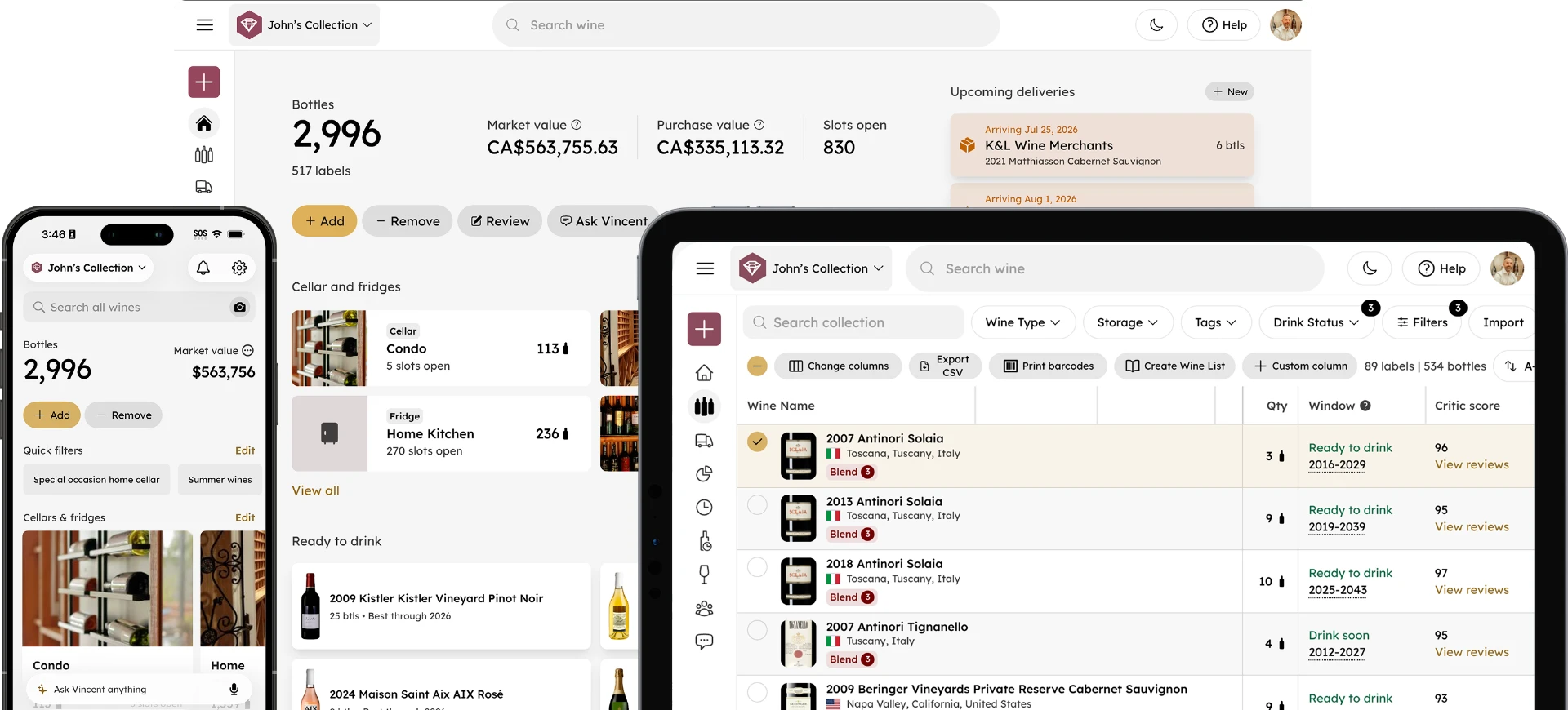
InVintory holds a drink window against every bottle, and Ready to Drink surfaces the whites that are at their peak so nothing is missed. It also tracks market value per bottle, vintage scores by region and grape, and exactly where each bottle sits in your storage through VinLocate.
Track drink windows across every white in your cellar →
For pairing beyond the usual Chardonnay and seafood pattern, see our guide to AI food and wine pairing.
Frequently Asked Questions
What is the most popular white wine?
Chardonnay is the most widely recognized white grape and the anchor of most serious white collections, largely because of White Burgundy. Sauvignon Blanc and Pinot Grigio are the most common choices for everyday drinking.
What is the most collectible white wine?
White Burgundy is the most sought after white for serious collectors. Great German Riesling, Loire Chenin Blanc and Sauternes are just as age worthy and often better value.
Which white wine is driest?
Sauvignon Blanc, Albarino, Gruner Veltliner, Vermentino, Chablis and dry Riesling are all reliably dry and crisp. Look for "trocken" on German labels to find dry Riesling.
Which white wines are sweet?
Moscato, late harvest and botrytized wines like Sauternes, and German Riesling at Auslese level and above are usually sweet. Gewurztraminer and Alsace Pinot Gris are often off dry.
Do white wines age as well as red wines?
The best do. Great White Burgundy, Riesling, Loire Chenin Blanc and Sauternes can age for 15 to 30 years in the right conditions, but most everyday whites are best within 3 to 5 years.
Which white should I open tonight?
That depends on what you are eating and what is ready to drink in your cellar. Vincent, InVintory's AI sommelier, answers from your own collection rather than a generic pairing chart. Ask Vincent what to open →