Wine Collection Insurance: How to Insure Wine
Madeleine Cruickshank
July 30, 2026 · 6 min read
Does homeowner's insurance cover a wine collection?
Partly: a standard homeowner's policy can cover wine as personal property, but its limits, deductible and exclusions can leave a serious cellar underinsured.
BrokerLink, a Canadian insurance broker, says many home policies cap claims on specific categories of items, often somewhere between $500 and $5,000. Insurance Business magazine notes that wine is covered up to the policy's limits and subject to a deductible, and that coverage differs by insurer, so read the fine print.
Ask your insurer three things: what the limit is for wine or collectibles, whether the cap is per item or in total, and whether loss from equipment or temperature failure is covered.
Types of Wine Collection Insurance
Homeowner's policy rider
A rider or endorsement raises your limit for wine on an existing homeowner's policy. BrokerLink describes endorsements as a way to increase limits or remove restrictions for high-value collectibles. Ask whether the rider covers temperature and equipment failure, since some policies treat those risks separately.
Standalone specialty wine policy
A standalone policy is a dedicated wine policy bought separately from your homeowner's coverage. Wine Spectator says all wine policies protect against theft and fire, so ask about breakage, temperature failure and whether the policy follows the wine to a second home or off-site storage.
Scheduled, bottle-by-bottle coverage
Scheduled coverage insures each bottle at its own agreed value, while blanket coverage insures the collection under one lump sum. Wine Spectator says a blanket policy suits bottles worth less than $1,000 each, and warns that blanket policies can cap the payout per bottle. Its example is a $10,000 limit. Scheduling needs more documentation upfront, such as invoices or an appraisal.
What Wine Insurance Actually Costs
How much does it cost to insure a wine collection?
Specialty wine premiums are priced per $100 of insured value and vary by insurer, so get quotes. Wine Spectator reports about 42 to 50 cents per $100 of coverage, or around $250 a year for a $50,000 cellar, and says many insurers will not write a policy for less than about $500 in premium unless you already hold other policies with them. Published rates date quickly, so treat these as a reference point and not a quote.
Insurers may also price on how your collection is stored and protected, so be ready to describe your cooling system, alarm and security measures or storage facility.
What Happens When You File a Claim
A claim starts with reporting the loss to your insurer and providing inventory documentation to establish what was lost and what it was worth. For a partial loss, such as a cooling failure that damaged some bottles, an adjuster may want to inspect the affected bottles or storage area. With scheduled coverage, the insurer already has an agreed value for each bottle, which can make the valuation step simpler.
How smoothly a claim goes depends heavily on whether your documentation was current before the loss. An inventory rebuilt from memory after a flood or fire is a much weaker starting point than one already on file.
Coverage for Off-Site and International Storage
If part of your collection is in a professional storage facility, a second home or in transit, confirm in writing that your policy follows the wine and not just one address. Some policies cover only the location on file, which can leave off-site bottles exposed.
This matters for collectors buying from overseas estates or at international auction. Ask your insurer whether coverage applies in transit and what a shipping carrier's own liability covers for fine wine.
Common Mistakes Collectors Make With Wine Insurance
Assuming homeowner's coverage is enough
This is a common gap, and it is usually discovered after a loss, when it is too late to fix. Check your limits before you need them.
Letting appraisals go stale
Wine Spectator notes that the policyholder is responsible for telling the insurer about significant increases in value. A bottle listed at $2,000 that is now worth $10,000 may be underinsured.
Not documenting storage conditions
Insurers may ask about your cooling system, humidity control and security measures. Having them documented lets you answer quickly and accurately.
Treating insurance as a one-time setup task
A policy that fit your collection when you bought it can drift out of line within a couple of years if nobody revisits it.
What Documentation Insurers Actually Require
A current inventory
A current inventory with producer, vintage, quantity and purchase price is the baseline for any policy, since insurers use it to set the insured value.
Proof of purchase where available
Receipts or purchase records support your stated value. Rough Notes, an insurance trade magazine, quoted a specialty insurer saying it generally requires high values to be documented with invoices or professional wine appraisals. That article is from 2005, so ask your own insurer what it requires today.
Storage condition documentation
Insurers may ask about your cooling, humidity control and security, since these affect your risk profile and your rate.
Periodic appraisal updates
Update your appraisal when values move significantly, and ask your insurer how often it wants a new one. For appraisals, see how to get a wine collection appraised.
Using Your Collection Data to Support an Appraisal
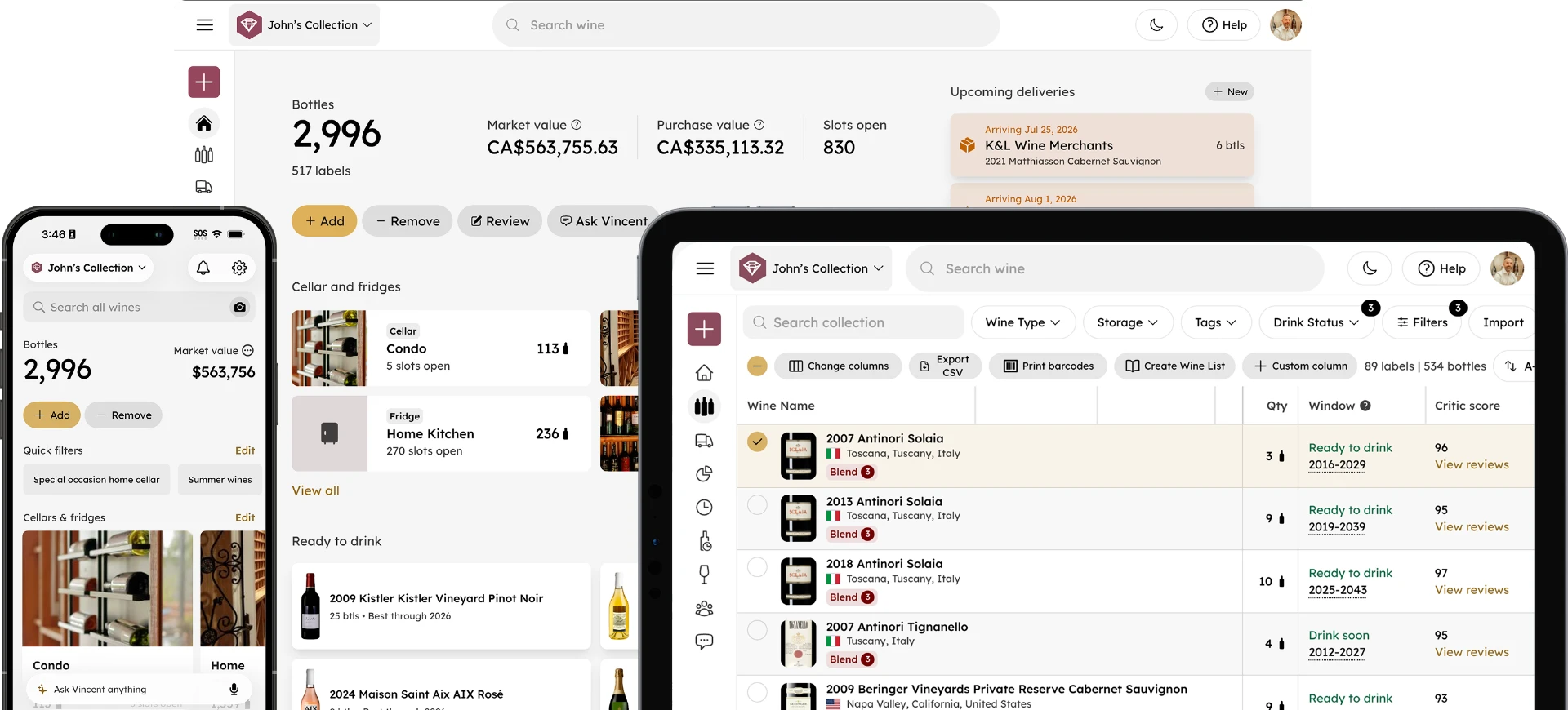
A detailed, exportable inventory with current valuation gives an insurer or appraiser the information needed to price a policy correctly. A vague description such as "a few hundred bottles" does not.
InVintory Premium tracks the market value of every bottle in your collection, using market data from Wine Labs, and you can export your collection to CSV or PDF for an insurer or appraiser. For how value tracking works, see how to track your wine collection's value automatically. For the insurer's file in detail, see insurance for collectors: exporting audit-ready wine inventories.
When to Update Your Coverage
Update your policy whenever your collection's value shifts meaningfully, whether from new acquisitions, bottles you have consumed or market movement on what you hold. A policy sized for the collection you owned two years ago may leave you underinsured or, less often, paying for cover you no longer need.
For what drives value over time, see our guide to which wines actually hold their value. If you are weighing whether to keep, sell or drink a bottle, see when to drink, sell, or hold. For the broader picture on wine as an asset, see our guide to investing in wine.
Insurance also depends on protecting the collection itself, so see wine collection security: preventing theft and how to pass down a wine collection.
Ready to generate insurance-ready documentation for your collection?
FAQ
Is my wine collection covered under my regular homeowner's insurance?
Partly, in most cases. Policies often cap specific categories of items, so ask your insurer for the limit on wine and collectibles, and whether equipment or temperature failure is covered.
At what collection value should I get a standalone wine policy?
There is no fixed threshold, but once your collection's value exceeds your homeowner's limit for wine or collectibles, a standalone policy or a rider is worth pricing out.
What's the difference between blanket coverage and scheduled coverage?
Blanket coverage insures your collection under one lump sum. Scheduled coverage insures individual bottles at their own agreed value, which is more precise but needs more documentation.
How often should I update my wine collection's insurance appraisal?
Update it when values shift significantly, such as after new purchases, consumption or market movement, and ask your insurer how often it wants a new appraisal.